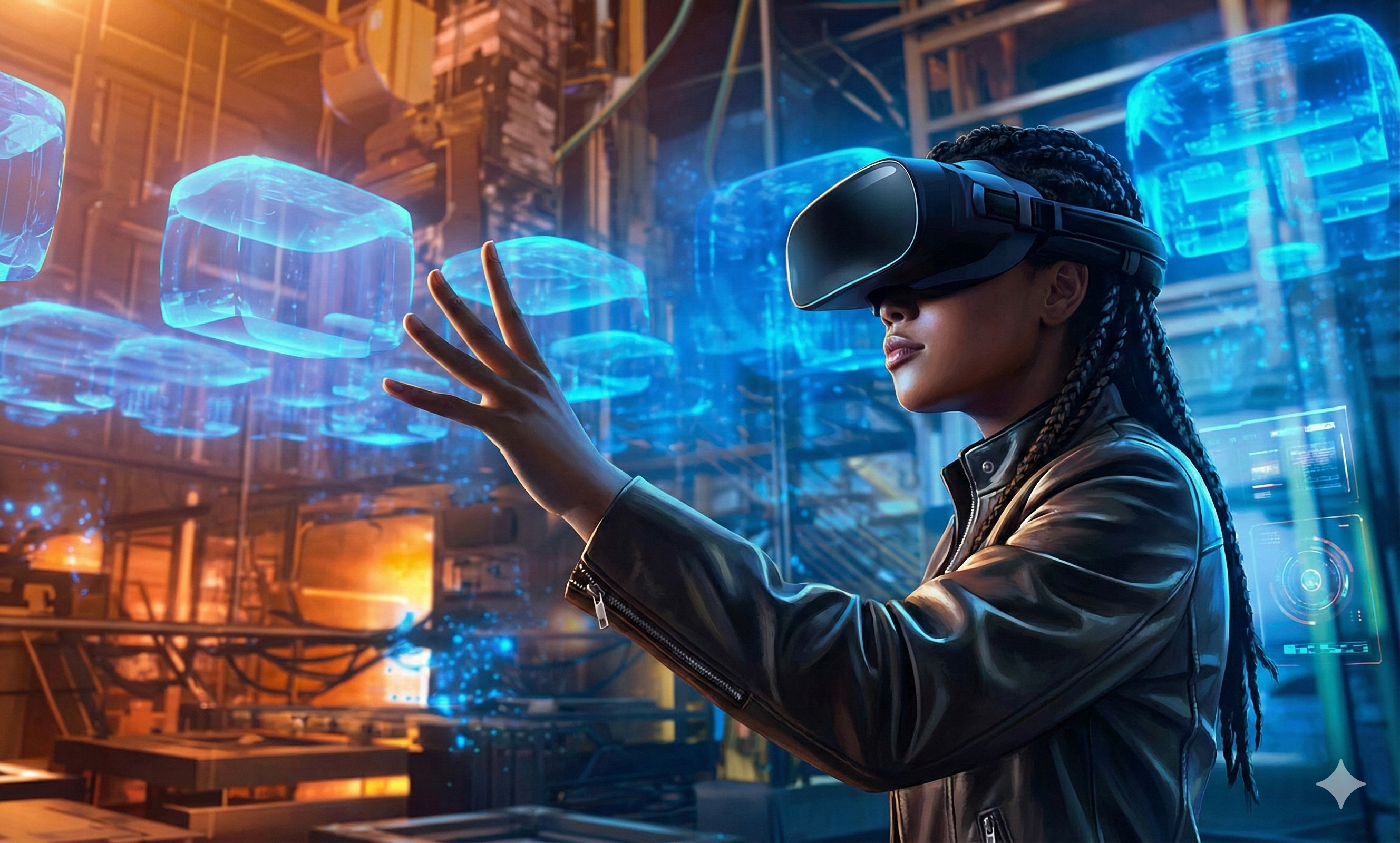
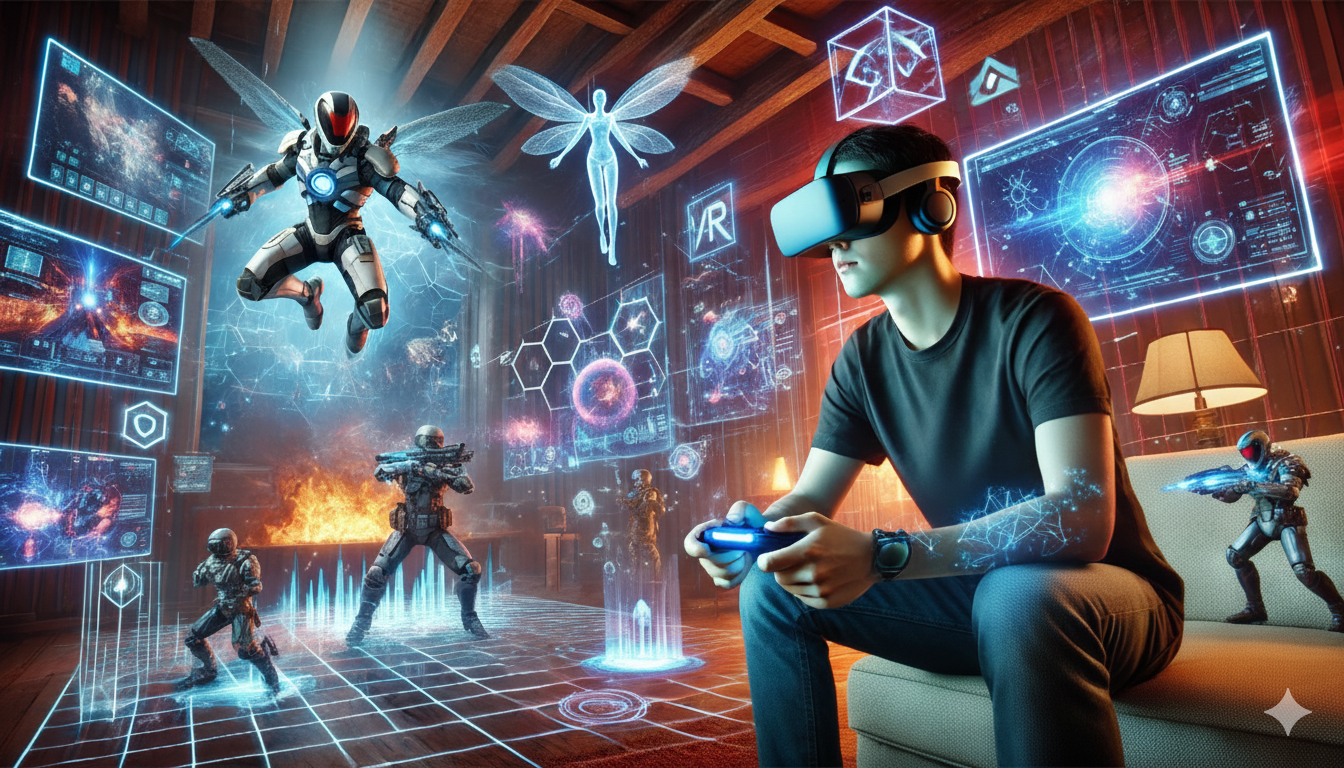

The shift from flat-screen gaming to Extended Reality (XR) is not just a design challenge; it is a massive engineering hurdle. In a traditional game, a dropped frame is an annoyance. In VR, it is a physiological hazard that can cause immediate nausea.
For developers, building for AR/VR means battling the limits of human perception and hardware capability simultaneously. Below are the core technical challenges defining the medium and the engineering solutions used to overcome them.
1. The Latency Bottleneck: Motion-to-Photon
The "Motion-to-Photon" (MTP) latency is the time it takes for a user's physical movement to be reflected as a photon on the display. To prevent "simulation sickness"—caused by a disconnect between the vestibular system (inner ear) and the visual system—this delay must stay under 20 milliseconds.
The Engineering Solution: Asynchronous Spacewarp (ASW)
Achieving a consistent 90 FPS (frames per second) on mobile chipsets is often impossible. Engineers solved this not by rendering faster, but by predicting the future.
Asynchronous Timewarp (ATW): If the GPU fails to finish a frame in time, ATW takes the previous frame and rotates it to match the user's latest head position right before displaying it. This fixes rotation but ignores positional movement.
Asynchronous Spacewarp (ASW): This is the advanced evolution. ASW analyzes the motion vectors of the previous two frames to generate a synthetic "intermediate" frame. If the game drops to 45 FPS, ASW fills in every other frame to simulate a smooth 90 FPS experience, buying the GPU valuable milliseconds.
2. Rendering Optimization: The GPU Tax
VR requires rendering two slightly different images (one for each eye) at high resolution (4K+) and high refresh rates. This effectively quadruples the rendering load compared to a standard 1080p console game.
The Engineering Solution: Foveated Rendering
This technique mimics human biology to save processing power. The human eye only sees sharp detail in the center of the vision (the fovea), while peripheral vision is blurry.
Fixed Foveated Rendering (FFR): Renders the center of the screen at high resolution and aggressively downscales the edges.
Eye-Tracked Foveated Rendering: Uses internal cameras to track the pupil 100+ times per second. The GPU dynamically renders high-fidelity graphics only where the user is looking. This can reduce the shading load by up to 60%, freeing up resources for complex lighting or physics.
3. AR Occlusion: The "Ghost" Object Problem
In early AR, virtual objects would float over everything. If a virtual cat walked behind a real-world sofa, it would still appear on top of the sofa, breaking the illusion. This is the occlusion problem: the software doesn't know the sofa exists in 3D space.
The Engineering Solution: Real-Time Depth Buffering
Modern AR engines (like ARKit and ARCore) utilize LiDAR (Light Detection and Ranging) and Time-of-Flight (ToF) sensors to build a dynamic depth map of the room in milliseconds.
Depth API: The camera generates a grayscale depth map where every pixel represents a distance value. The rendering engine uses this as a "mask." If a real-world pixel is closer to the camera than the virtual object's pixel, the virtual pixel is discarded (not rendered), allowing the real object to obscure the virtual one seamlessly.
4. Stability in Tracking: SLAM Drift
For an AR object to stay "pinned" to a table, the device must understand its position in the room with millimeter precision. Sensors (gyroscopes/accelerometers) are fast but prone to "drift"—small errors that accumulate, causing the virtual world to slowly float away.
The Engineering Solution: Sensor Fusion & Loop Closure
Developers use Simultaneous Localization and Mapping (SLAM) algorithms that fuse data from cameras and IMUs (Inertial Measurement Units).
Feature Extraction: The camera identifies high-contrast "feature points" (corners, edges) in the real world.
Loop Closure: The system remembers these points. If the device drifts but then recognizes a previously visited "feature point" (like the corner of a rug), the algorithm mathematically snaps the virtual coordinate system back into alignment, correcting the accumulated error instantly.
5. Multiplayer Physics: The Synchronization Nightmare
In a flat game, if a player's ping causes a delay, they might rubber-band slightly. In VR, if you hand a virtual object to a friend and the physics aren't perfectly synced, the object will jitter or drop, breaking "social presence."
The Engineering Solution: Client-Side Prediction & Interpolation
Instead of waiting for the server to confirm an action (which takes 50-100ms), the local client predicts the outcome.
Local Authority: When a player grabs an object, their client temporarily takes "ownership" (authority) of that object's physics. The movement is rendered instantly for them.
State Interpolation: For other players observing the action, the game doesn't snap the object to the new position. It smooths the movement between the last known position and the new server packet, masking network latency with fluid animation.
Conclusion
The success of AR/VR development relies less on brute-force graphical power and more on "perceptual engineering"—tricks that fool the brain and eyes into accepting a digital reality. By mastering techniques like Asynchronous Spacewarp and Foveated Rendering, developers can deliver immersive experiences even on mobile hardware.