

Real estate and proptech
Everyone is piloting AI in real estate. Almost nobody has shipped it.
The demo is the easy part. We build the last thirty percent, the data integration, the compliance, and the production hardening that turns a proptech prototype into a platform your buyers, renters, and regulators can actually rely on.
The state of play
The gap is not ambition. It is execution.
The industry is not short of AI pilots or proptech demos. It is short of the ones that reached production. These are the numbers that describe the distance between the two.
88% / 5%
of real estate investors and owners are piloting AI, but only five percent have hit all their goals with it. The distance between those two numbers is the whole opportunity.
JLL Global Real Estate Technology Survey, 2025
21x
more likely to qualify a lead when you respond within five minutes rather than thirty. Speed to lead is the cheapest growth lever in real estate, and the least pulled.
MIT / InsideSales research
78%
of buyers work with the first agent who responds to them. The race is usually won before a second firm has replied.
NAR Home Buyers and Sellers Report, 2025
15+ hrs
is the average time an agent takes to respond to a new lead. An always-on assistant closes that gap to seconds.
Inman Real Estate Technology Survey, 2025
95%
of organisations are seeing zero return on generative AI, despite heavy spend. The failure is almost never the model. It is the data and the integration around it.
MIT State of AI in Business, 2025
500+
independently governed MLSs in the US alone, each with its own schema and rules. The fragmentation tax is exactly what breaks a naive proptech build.
Real Estate Standards Organization (RESO)
Powering the future
of real estate.
Listing and discovery platforms
Search, filtering, and comparison that stays fast at real catalogue size, with listings that update in real time rather than going stale the moment they are posted.
Virtual tours and AR
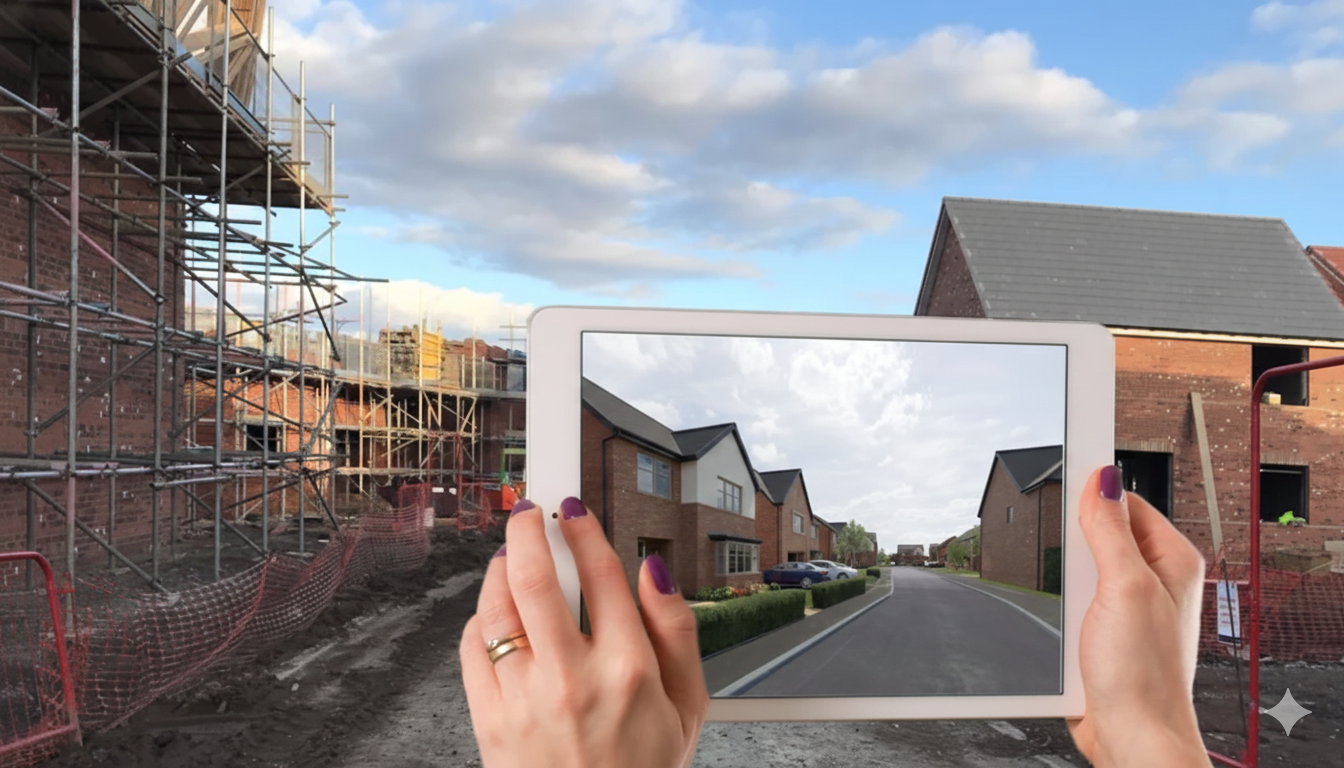
Immersive walkthroughs and AR previews that let a buyer shortlist from anywhere, cutting wasted viewings for everyone involved.
Enquiry and viewing assistants
Conversational AI that answers, qualifies, and books viewings the moment an enquiry lands, day or night, and hands a warm lead to a person at exactly the right point.
Property management systems
Lease management, maintenance workflows, tenant communication, and payments, built to survive the compliance regimes now landing in every market.
Valuation and analytics
Automated valuation and market analytics that are accurate and explainable, because a number a buyer or lender cannot trust is worse than no number at all.
Data integration and pipelines
The unglamorous layer under all of it: MLS, portal feeds, and registry data ingested, normalised, and kept clean. This is the work that decides whether the rest ships.
The current landscape
Where real estate loses, and where the work is.
Five frictions the market has been living with, and what building for them properly actually looks like.
The friction
Leads go cold before anyone replies
The average first response takes over fifteen hours, and the first firm to answer usually wins. Most enquiries arrive outside office hours, to nobody.
What we build
An always-on assistant that answers and qualifies in seconds, then routes a warm lead to the right person, so speed stops depending on who is at their desk.
The friction
Portal dependency eats the margin
In the UK, portal fees have outpaced agent commission growth three years running, and the portals own the buyer relationship you paid to reach.
What we build
Your own discovery and enquiry channel, so you own the lead and the data rather than renting visibility, and the marginal cost of the next lead falls instead of rising.
The friction
Listing data is fragmented and stale
MLS in the US, portal feeds in the UK, multiple sources in India. Each has its own schema and rules, and half of listings carry outdated or inaccurate information.
What we build
A data pipeline that ingests and normalises every source and keeps listings live, so the platform is built on data that is actually current rather than a snapshot.
The friction
Valuation nobody quite trusts
Even a best-in-class automated valuation misses materially on off-market homes. A number a buyer or lender cannot trust does not get used.
What we build
Valuation models built on your own deeper data, with the reasoning exposed, so an estimate becomes something a user acts on rather than second-guesses.
The friction
Compliance keeps changing under you
The NAR settlement in the US, the Renters Rights Act in the UK, RERA in India. Each rewrites what a compliant transaction looks like, on its own timeline.
What we build
Compliance built into the product from day one rather than bolted on later, which is both cheaper and safer than retrofitting a platform after the rules move.

Case study · Residential proptech
A property management system that does not collapse at scale.
Acredge came to us for a single landing page. What they needed was a place where property data lives once and stays correct everywhere. We built the system, modelled property as a hierarchy rather than a flat listing table, and built a listing flow their own team runs without us.
- 4 levelsProperty, building, unit, and room modelled separately
- 1 pageWhat the original brief asked for
- v1 firstA working system shown before any proposal
How we help you win
Four places a product firm earns its keep.
Not a menu of features. The four moves that, on the evidence above, move the numbers that matter in real estate.
Turn speed into your advantage
The evidence is unanimous: the fast responder wins. We build the always-on enquiry layer that converts leads you have already paid to acquire, which is cheaper than acquiring more.
Own your channel
Depending on a portal means renting your own customer relationship. We build the discovery and enquiry surface that puts the lead, and the data behind it, back on your side of the ledger.
Make trust a feature
Accurate, explainable valuation and clean, current listings are not table stakes in this market, they are a differentiator. We build the data foundation that makes them possible.
Ship the last thirty percent
Most proptech dies between a good demo and a live platform. That last stretch, integration, compliance, and hardening, is precisely the work we specialise in.
Fit
Whether this is right for you.
A good fit if
- You have a proptech prototype or product and need it built to production standard
- You are non technical and want a team that owns the hard parts rather than handing them back
- Real listing, portal, or registry data has to flow through your product cleanly
- A new regulatory regime in your market changes what compliant looks like
- You would rather convert the leads you have than only chase more
Probably not a fit if
- You want the cheapest possible build rather than one that survives real users
- The plan is a demo to raise on, with production treated as a later problem
- Nobody on your side can make decisions about data sources or compliance
- You need an off-the-shelf CRM rather than a product built around your workflow
- Speed and data quality are somebody else’s problem in your organisation
Insights
- Case-studyBuilding a property management system that does not collapse at scaleAcredge came to us for a landing page. The page was a symptom, not the requirement, so we built a first version of a property management system and showed it to them. The most valuable work was not the build. It was agreeing how few features to keep, and letting their own usage settle the rest. Aug 4, 2026
- ArticleThe Rise of Smart Property Management SystemsExploring how automated workflows and digital payment systems increase tenant satisfaction and agency productivity. Nov 29, 2025
- ArticleHow AR is Reshaping Property DiscoveryA simple look at how AR-based property tours improve buyer confidence and shorten decision cycles. Nov 29, 2025
- ArticleWhy Real Estate Must Embrace Digital Transformation in 2025A quick breakdown of how modern buyers expect fast, immersive, and transparent digital journeys throughout their property search. Nov 29, 2025


Common questions
Answered before you have to ask.
Do you understand real estate data specifically, or just software?
Specifically. The reason most proptech builds stall is that MLS in the US, portal feeds in the UK, and multiple listing and registry sources in India each have their own schema, licensing, and rules. We treat that integration and normalisation work as the core of the project rather than an afterthought, because it is what decides whether anything else ships.
Can you take our prototype to production rather than starting over?
Usually, yes, and it is what we prefer. A prototype answers whether the idea works. What it typically lacks is the last thirty percent: real data integration, compliance, authentication, and the hardening that a live platform with real listings and real money needs. We pick it up from where it actually is.
How do you handle the compliance regimes in our market?
By building them in from the start rather than bolting them on. Whether that is the NAR settlement and buyer agreements in the US, the Renters Rights Act in the UK, or RERA in India, we design the product around the rules that apply to you. Retrofitting compliance into a live platform is both more expensive and more dangerous than designing for it upfront.
We want an AI assistant for enquiries. Is that realistic?
Realistic and well evidenced. An always-on assistant that answers and qualifies in seconds directly addresses the single biggest leak in real estate: the fifteen-hour average response time, against buyers who overwhelmingly go with whoever replies first. We build it to hand a qualified lead to a person at the right moment rather than to replace that person.
Do we own everything at the end?
Completely. The repository, the hosting, the data pipelines, the accounts, and every credential are in your name throughout. If you take the work elsewhere later, nothing is held hostage.
What does it cost?
We price after we understand the scope, never before, because a listing platform and an enquiry assistant are very different builds. A thirty minute call at no charge, then a written scope with the work broken down and a fixed number against it, so there is nothing to be surprised by later.


