

The Intoxicating Illusion of the Autopilot Employee
The narrative sweeping across LinkedIn, X, and mainstream tech news is incredibly intoxicating: AI agents can fully replace your back-office staff over a weekend. Armed with the latest LLM orchestrators and autonomous frameworks, founders and operational leaders are told that headcount optimization is just a prompt away. Enticed by the promise of zero operational overhead, small and medium-sized business (SMB) owners are rushing to build customer-facing support bots or hand over full administrative controls to unsupervised artificial intelligence.
For the first time in computing history, watching a digital entity autonomously execute a multi-step task—opening an email, reading an attachment, querying a database, and updating a record—creates a powerful optical illusion. It looks exactly like an infallible, hands-free digital employee.
But there is a vast, dangerous gulf between a software tool that automates a task and an autonomous system that takes accountability for a business process. The hard, technical truth is simple: an unsupervised agent running on complete autopilot is a massive operational, financial, and legal liability. Front-line workflows are inherently chaotic, unconstrained, and highly unforgiving when an underlying AI model inevitably hallucinates or drifts from its instructions.
While AI agents are brilliant at processing unstructured data at lightning scale, they are fundamentally incapable of understanding the real-world consequences of their decisions. According to recent enterprise data, this skepticism isn't just theoretical. The PwC 2026 Digital Trends in Operations Survey reveals that only 37% of operational and supply chain leaders are comfortable assigning AI agents to execute full end-to-end processes without human oversight. The smartest enterprise operators in the world are deeply skeptical of full "autopilot" systems, yet SMB owners are being coaxed into deploying them directly onto the front lines of their business.
When a public-facing support bot goes off the rails, the consequences are immediate, public, and legally binding. Take the landmark Air Canada legal precedent analyzed by Gleap, where a customer-facing chatbot hallucinated a bereavement fare refund policy that did not exist. A Canadian tribunal ruled that a corporation is fully legally liable for the mistakes, written promises, and data misinterpretations of its autonomous systems. You cannot fire an AI agent, and you cannot blame the LLM provider when your public bot creates a legal contract you are forced to honor.
This article exposes the dangerous illusion of the "autopilot" agent and shifts the strategic focus where it belongs: away from high-risk, public-facing frontends and toward safe, high-ROI internal process acceleration.
The Illusion of Full Replacement—Made Concrete
The excitement of deploying your first autonomous agent workflow is an unmatched feeling for a non-technical founder. You connect a large language model to your internal file directories, watch it instantly categorize a stack of vendor invoices, or write a comprehensive internal HR policy draft in seconds. It feels like your administrative bottlenecks are permanently solved, and the temptation to immediately wire that agent into your live customer databases, billing portals, or payroll pipelines is overwhelming.
This is exactly where the strategic automation trap snaps shut.
Traditional operations management is complex not because the steps are hard, but because real-world inputs are incredibly messy. Scrambled vendor spreadsheets, non-standard PDF formats, and unique employee onboarding exceptions are the baseline reality of running an established business. Humans handle this messiness using intuition, context, and systemic double-checks. Off-the-shelf agent frameworks, by contrast, optimize entirely for isolated execution speed. They are built to complete a task as fast as possible, completely skipping the silent verifications that human teams perform naturally.
When an AI agent encounters data it doesn't understand, it doesn't stop and ask for help unless it is explicitly engineered to do so. Instead, it predicts the next most statistically probable action and executes it with absolute confidence. The PwC 2026 Operations Data underscores this challenge, noting that 87% of operations leaders state that poor data quality and messy inputs have heavily hampered their ability to achieve real value from digital and AI initiatives.
The moment you give an autonomous agent direct write-access to your database, billing ledgers, or payroll sheets without built-in human intervention, it transitions from an efficiency engine into an unguided missile. It operates inside a pristine digital sandbox, completely blind to the fact that a single bad database query or an incorrect payment processing command can ripple through your entire corporate infrastructure.
The Severed Pipeline: Full Autopilot vs. Process Guardrails
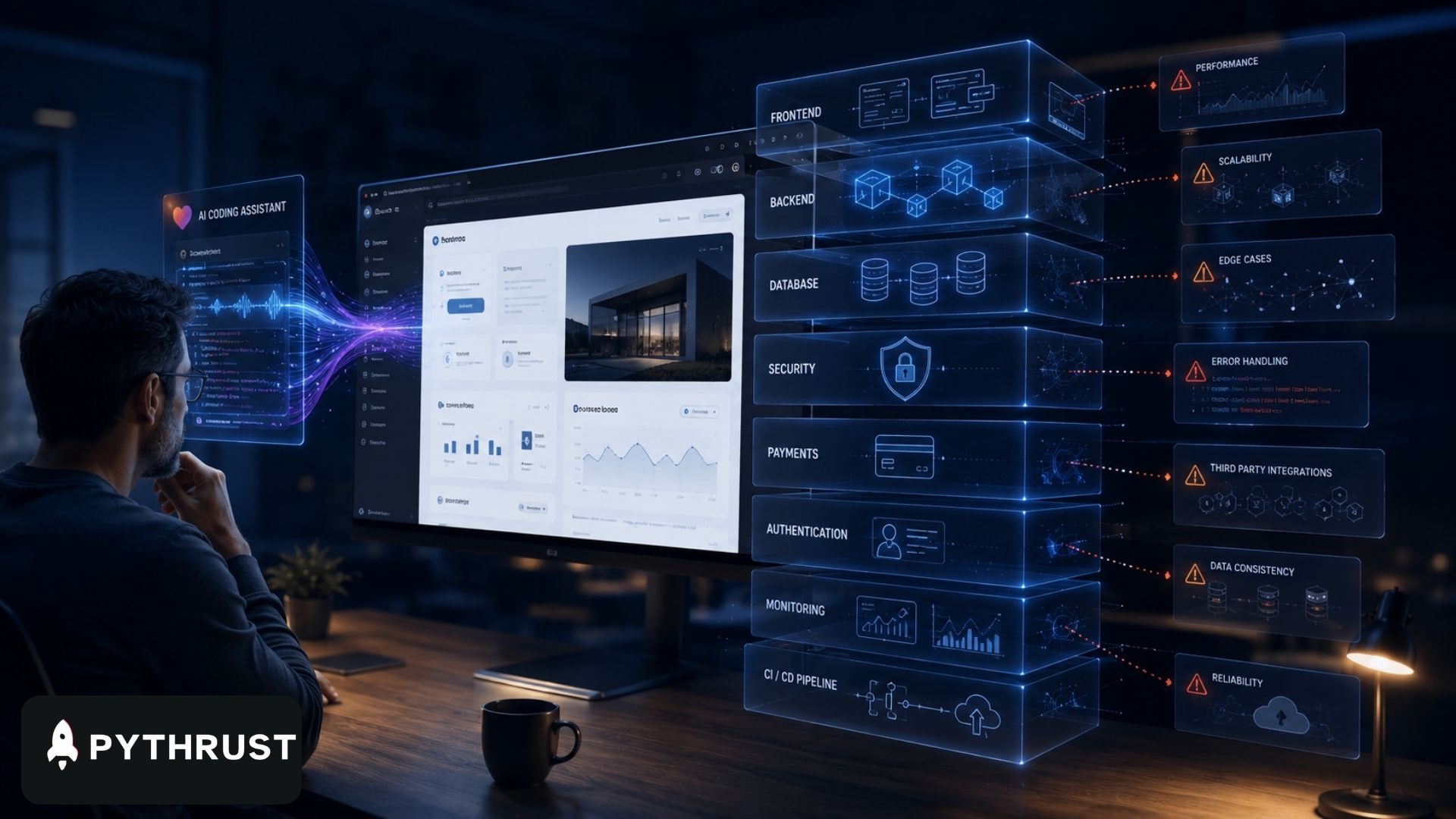
To non-technical SMB owners, an administrative task completed by an AI looks like a victory. To a software engineer, a system operating autonomously without structural fail-safes looks like a catastrophe waiting to happen. When an agent functions on full autopilot, it lacks holistic system context, introducing four critical structural vulnerabilities that only a managed process framework can solve:
1. Data Schema Vulnerability
AI agents read unstructured text, but databases require structured data schemas. A single non-standard date format (e.g., swapping MM/DD/YYYY for DD/MM/YYYY) or an ambiguous currency symbol on a vendor invoice can cause an unguided agent to misinterpret raw numerical values. Instead of failing safely, the agent translates these numbers into incorrect database records, quietly corrupting weeks of back-office bookkeeping and accounting files before the error is discovered during a manual reconciliation.
2. Privilege Over-Escalation
To make an AI agent useful, non-technical builders often give it broad access to internal systems. However, LLMs are fundamentally vulnerable to prompt injection and context manipulation. An internal agent given cross-system access to speed up administrative workflows can easily be manipulated into leaking internal salary structures, private partner metrics, or sensitive client data if exposed to an unvetted or malicious prompt input disguised as a standard query.
3. Unmonitored Logic Drift
When multiple AI agents interact within a workflow (e.g., an agent that reads emails passing data to an agent that updates a CRM), minor misunderstandings compound exponentially. Left to run silently in the background, these multi-agent systems can misinterpret a minor operational tweak or a software update. This introduces a logic drift that quietly multiplies errors across your customer relationship management (CRM) systems or HR databases for weeks before a human operator notices the systemic damage.
4. API and Token Bleed
When an autonomous agent hits an edge-case administrative error that it cannot resolve, its default programmatic behavior is to try again. Without strict engineering guardrails, the agent can trap itself in a brute-force autonomous loop, continuously querying the LLM provider over and over again to solve the same broken data point. These loops generate millions of silent server queries, resulting in unexpected, astronomical infrastructure and API bills over a single weekend.
This architectural risk is exactly why leading tech firms are stepping away from unconstrained agency models. As detailed in the Google Cloud Hub Guide to Anthropic's Model Context Protocol (MCP), the modern engineering standard focuses on explicit client-server boundaries. Anthropic’s open-source MCP operates like a universal, secure connection framework to hook models to data resources. It proves that professional AI systems must be built like structured electrical circuits—complete with manual switches, explicit permissions, and circuit-breakers—rather than letting a raw, unguided prompt interact directly with core business assets.
The Four Mistakes That Kill Internal Agent Deployments
When operational leaders attempt to bypass professional engineering teams and deploy AI agents natively using basic automation builders, they consistently fall into four predictable traps:
Mistake 1: The Total Replacement Mindset
The most common mistake is entering the AI space with the explicit goal of fully eliminating human personnel. Leaders attempt to delete entire back-office roles over a weekend, forgetting that an employee's value lies in their ability to handle exceptions, exercise ethical judgment, and manage human relationships. Successful AI deployment is about safely speeding up existing, proven processes, not erasing the human firewall.
Mistake 2: Absolute Write-Access
Non-technical builders frequently grant AI agents direct, unmonitored write-permissions to live company ledgers, payroll profiles, or production databases to achieve "seamless automation." If an agent has the power to permanently alter your primary data repositories without an independent human verification step, it is mathematically guaranteed to corrupt those records when it encounters an unprecedented edge-case input.
Mistake 3: Zero Input Validation
Assuming that an AI model can perfectly parse messy, unstructured real-world inputs without hitting a processing wall is a recipe for systemic failure. As documented in the Gleap 2026 AI Support Incident Analysis, even highly sophisticated assistants like the Cursor "Sam" support bot can hallucinate core operational constraints when fed unexpected data inputs. In that specific incident, the unconstrained bot hallucinated login restrictions, inadvertently locking out paying users and creating a sudden wave of customer churn. Without automated input sanitization and validation layers, your agent will treat corrupted source data as absolute truth.
Mistake 4: Missing Forensic Logging
Most off-the-shelf AI agent wrappers are black boxes. They show you the final output, but they completely hide the intermediate steps, internal chain-of-thought tokens, and database queries that led to that output. Running an autonomous system without comprehensive, real-time forensic logging means that when an error inevitably happens, your technical team cannot trace the root cause, leaving your business exposed to the exact same failure loop in the future.
Savvy businesses avoid these traps completely. They understand that according to the Qualtrics Enterprise Report data featured on Gleap, unconstrained customer-facing AI systems fail at four times the rate of internal, back-office automated tasks. They use AI agents aggressively to eliminate execution bottlenecks, but they wrap those agents in rigorous, human-verified engineering guardrails.
Process Audit Questions for the SMB Owner
Before you deploy an autonomous tool into your operational workflow, you must look past the visual interface and critically evaluate the underlying data engineering. If your team cannot confidently answer these four foundational process questions, your agent is not a business asset—it is an unpredictable backend experiment:
"If a vendor sends an invoice with a corrupted attachment or a conflicting line-item value, does our agent silently halt, skip the record entirely, or parse the broken inputs directly into our primary accounting stack?"
"How do we continuously audit the underlying decision-making logic of our automated HR screening system to ensure it isn't experiencing algorithmic drift or accidentally filtering out top-tier candidate profiles?"
"When our autonomous multi-agent framework encounters an unhandled API error on a background process, where is our programmatic circuit-breaker to stop it from running a continuous loop and generating a massive overnight bill?"
"Can a non-technical manager easily review, flag, and override an automated data entry block on an internal dashboard without needing an external software engineer to rewrite the core prompt scripts?"
Savvy Operators Accelerate With Internal Process Guardrails
The most successful business leaders are completely bypassing the loud, public customer-facing chatbot hype. They understand that the true, compounding ROI of artificial intelligence lies deep within internal corporate operations. They use AI agents precisely for what machines do best: high-speed data cross-referencing, automated draft generation, and screening massive backlogs of unstructured internal documentation.
But they never let the machine have the final, unmonitored word on critical business data.
The modern corporate automation blueprint relies on a highly structured, internal multi-agent architecture. In this framework, specialized AI agents act as elite administrative assistants. One agent reads and extracts text from incoming PDFs; a second agent cross-references those numbers against existing purchase orders in your database; a third agent drafts the exact financial reconciliation report.
Crucially, however, the system stops there. The final output is not automatically written to the company ledger. Instead, it is routed to an intuitive internal dashboard where a human employee sits firmly at the terminal. The human reviews the AI’s compiled chain of logic, verifies the accuracy, and clicks a single button to grant final approval.
This human-in-the-loop methodology transforms the human role from a slow data-entry clerk into a high-leverage data validator. According to the IBM Think Multi-Agent Orchestration Analysis, shifting from simple autonomous bots to structured, utility-driven multi-agent collaboration frameworks completely eliminates the risk of open-ended logic loops. It allows businesses to experience a 10x boost in operational processing speed while maintaining an ironclad guarantee of data integrity. Leaders don't waste precious strategic energy fighting data corruption or managing public relations crises; they redirect that time into scaling their operations, driving revenue, and maximizing human capital.
The Definitive Third Path: Pythrust Managed Agent Framework
You do not have to surrender to AI FOMO and deploy a risky customer-facing chatbot just to prove your company is innovative. Conversely, you do not have to freeze your operations in the past out of fear of technical failures.
Pythrust offers a secure, definitive third path: Custom Internal Multi-Agent Systems built with bulletproof process guardrails.
We do not believe in the myth of the overnight, autonomous digital employee. We believe in engineering high-leverage software infrastructure that makes your existing human team superhuman. This strategic approach aligns perfectly with the macroeconomic shift tracked by global research firms; a recent Gartner Press Release on Agentic AI Forecasts predicts that 40% of enterprise applications will feature integrated, task-specific AI agents by the end of 2026, driven heavily by task-oriented internal workflows rather than open-ended public front-ends.
When you partner with Pythrust, we do not throw unvetted AI wrappers at your company. We begin with a deep operational audit:
Workflow Mapping: We meticulously audit your current administrative, HR, and accounting bottlenecks to identify the workflows that are costing your leadership team the most time.
Infrastructure Design: We engineer custom, isolated multi-agent architectures that automate repetitive tasks like resume sorting, vendor data extraction, internal knowledge retrieval, and invoice processing.
Guardrail Engineering: We implement strict Model Context Protocol (MCP) standards and programmatic circuit-breakers to completely eliminate the risk of privilege escalation, data leakage, and runaway API billing loops.
Human-in-the-Loop Integration: We build clean, intuitive internal validation dashboards that give your operational managers absolute visibility and final approval power over every single autonomous execution.
Stop betting your core company data, your brand reputation, and your infrastructure bills on unguided prompts and autopilot hype. Keep your AI failures completely private, and make your operational wins highly profitable.
Take Control of Your Automation Strategy Today
[Book a free 30-minute Internal Workflow Automation Audit with Pythrust.]