

Product strategy and consulting
Knowing what to build is harder than building it.
We help founders and product teams decide what to build next, what to cut, and how to tell whether it worked. Evidence rather than opinion, and decisions rather than decks.
Strategic support.
To help you build, refine, or scale.
User & Market Insights
Find out what users actually need rather than what they say in a survey, and where the growth is being lost, through behavioural and competitive analysis.
Product Positioning
Sharpen what the product is for and who it is against, so that the value proposition survives being repeated by someone other than you.
Roadmapping & Planning
A roadmap that is a set of decisions rather than a list of requests, sequenced around user journeys and what the business needs to prove next.
Feature Prioritisation
Decide what gets built with evidence rather than volume of opinion, and decide just as deliberately what gets cut.
Go-to-Market Strategy
Plan launches, feature rollouts, and activation campaigns that put the product in front of the people most likely to keep using it.
Iteration & Growth Plan
Learning loops your team can run without us: the tests worth running, the metrics worth watching, and the cadence to review them on.
What this changes
- Find out whether the product solves a real problem before you spend another quarter on it.
- Turn behaviour, analytics, and churn into decisions rather than dashboards nobody acts on.
- Re-align the strategy when the market moves or the vision changes, without starting again.
- Cut complexity and low value features so the team can move on what actually matters.
Our approach
Insight-Led Strategy
We start with evidence: your users, your data, and the market you are actually competing in.
You leave with
- A synthesis of what users need
- An honest competitive read
- Where the opportunity sits
Structured Product Thinking
We turn that evidence into decisions, including the uncomfortable ones about what to stop doing.
You leave with
- A prioritised roadmap
- Clear scope for what is next
- A written list of what to cut
Rapid, Iterative Execution
Plans that survive contact with a real team, broken into work that can start on Monday.
You leave with
- A plan your team can execute
- A working cadence to run it on
- The first experiment defined
Data-Informed Decision Making
The instrumentation and review rhythm that let you tell whether any of it worked.
You leave with
- The few metrics that matter
- What to instrument, and how
- A review rhythm that sticks




How we engage
Three ways to work with us.
Which one fits depends on whether you need an outside read, a decision made, or product judgement in the room every week.
Product audit
Best when something is not working and you need an outside read on why, quickly.
What is included
- A review of the product, analytics, and roadmap
- Interviews with users and your team
- A written findings document, not a workshop
- A prioritised list of what to do about it
Fixed price, agreed after a scoping call.
Strategy sprint
Best when the destination is unclear and you need it decided rather than debated further.
What is included
- Working sessions with your team, not presentations at them
- Opportunity sizing and scope definition
- A roadmap you can start executing against
- A decision log recording what was chosen and why
Fixed price for a defined window.
Fractional product leadership
Best when you need product judgement in the room every week without hiring a full time head of product.
What is included
- Regular working time embedded with your team
- Roadmap ownership and prioritisation
- Support hiring and onboarding your own product people
- Direct access between sessions when decisions cannot wait
Monthly retainer. Rolling term, cancellable with notice.
How we arrive at a number
Every engagement is different, so we do not publish rate cards that would be wrong for you anyway. Instead: a 30 minute call at no charge, then a written scope with the work broken down, and a fixed number against it. You see the breakdown before you agree to anything, and nothing starts until you do.
Fit
Whether this is right for you.
A good fit if
- You have users and data but cannot agree internally on what to build next
- You are about to commit serious money and want the plan pressure tested first
- Your roadmap is a list of requests rather than a set of decisions
- You need product judgement without hiring a full time head of product
- You want someone who will disagree with you when the evidence says so
Probably not a fit if
- You want a document that validates a decision you have already made
- You need someone to manage a backlog rather than shape a direction
- Nobody in the room has the authority to act on what we find
- You want a deck rather than a change in what happens on Monday
- The real constraint is engineering capacity, in which case start with our build service
Insights
- ArticleTurning User Feedback Into Actionable Product DecisionsA framework to convert raw user feedback into clear product improvements and feature priorities. Nov 28, 2025
- ArticleWhy Most MVPs Fail - And How to Build One That Actually WorksLearn the core mistakes founders make and how to craft an MVP that users immediately understand and adopt. Nov 28, 2025
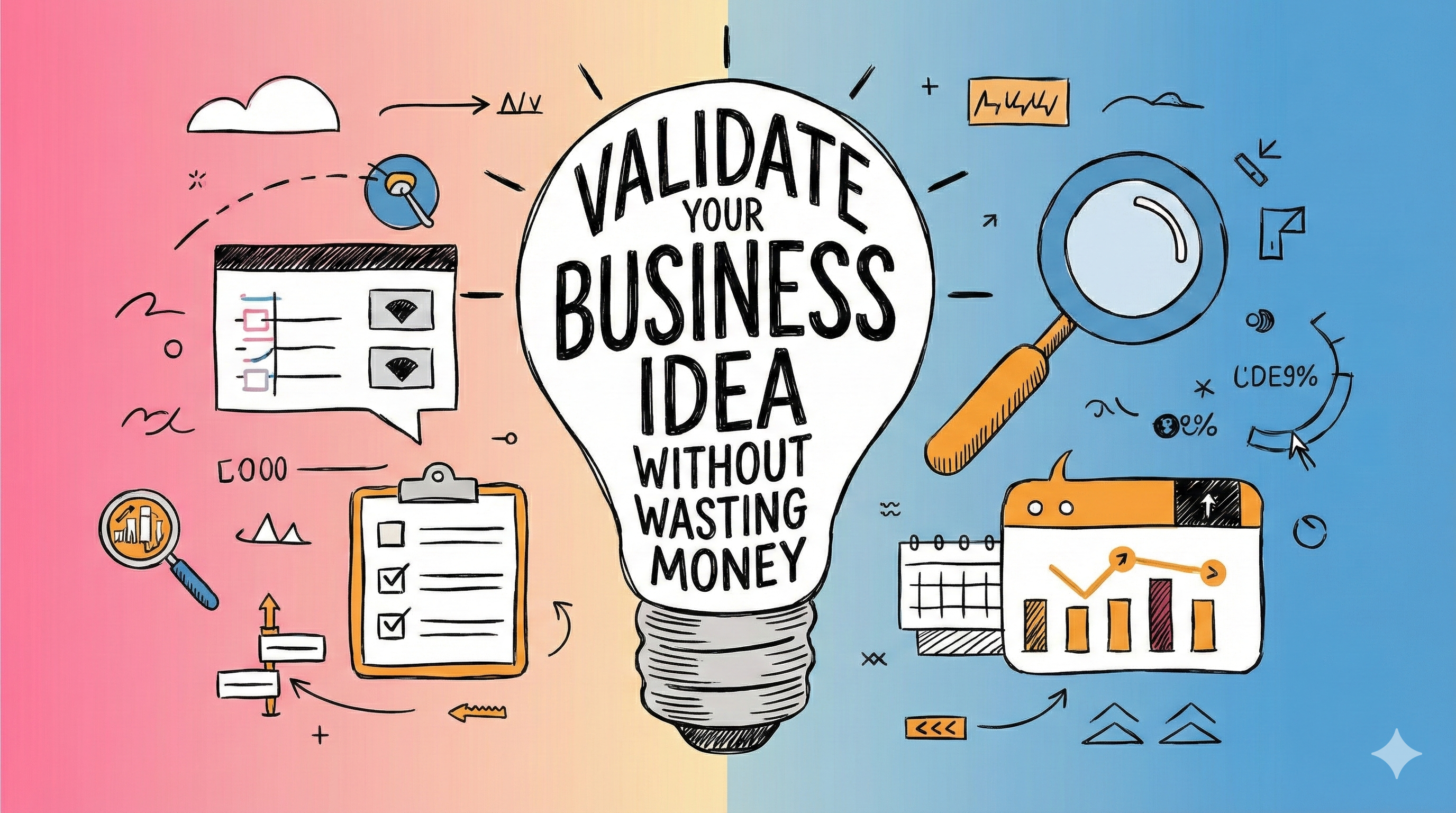
- ArticleHow Startups Can Validate Product Ideas Without Wasting Time or MoneyA simple guide to validating your concept early so you don’t build something nobody wants. Nov 28, 2025


Common questions
Answered before you have to ask.
What do we actually get at the end?
Written artefacts you can act on and circulate: a findings document, a prioritised roadmap, a decision log, and a definition of what to measure. Not a slide deck summarising a workshop you already attended.
Do you build the product as well?
We can, and plenty of clients continue into a build with us. But the consulting stands on its own and is priced on its own. If the right answer at the end is that someone else should build it, we will say so.
How long does an engagement take?
It depends on how much evidence already exists and how many people need to agree. An audit is short. A strategy sprint is a defined window. Fractional leadership is ongoing. We tell you the honest shape in writing after the scoping call.
What does it cost?
We price after we understand the problem, never before. A 30 minute call at no charge, then a written scope with the work broken down and a fixed number against it. You see the breakdown before you agree.
Will you work with our existing product team?
Yes, and it usually goes better when we do. We work alongside your people rather than around them, and part of the job is leaving your team better at making these decisions without us.
What if we disagree with your recommendation?
Then we show you the reasoning and the evidence behind it, and you decide. You are paying for an informed second opinion, not for someone to agree with the loudest person in the room, including us.


