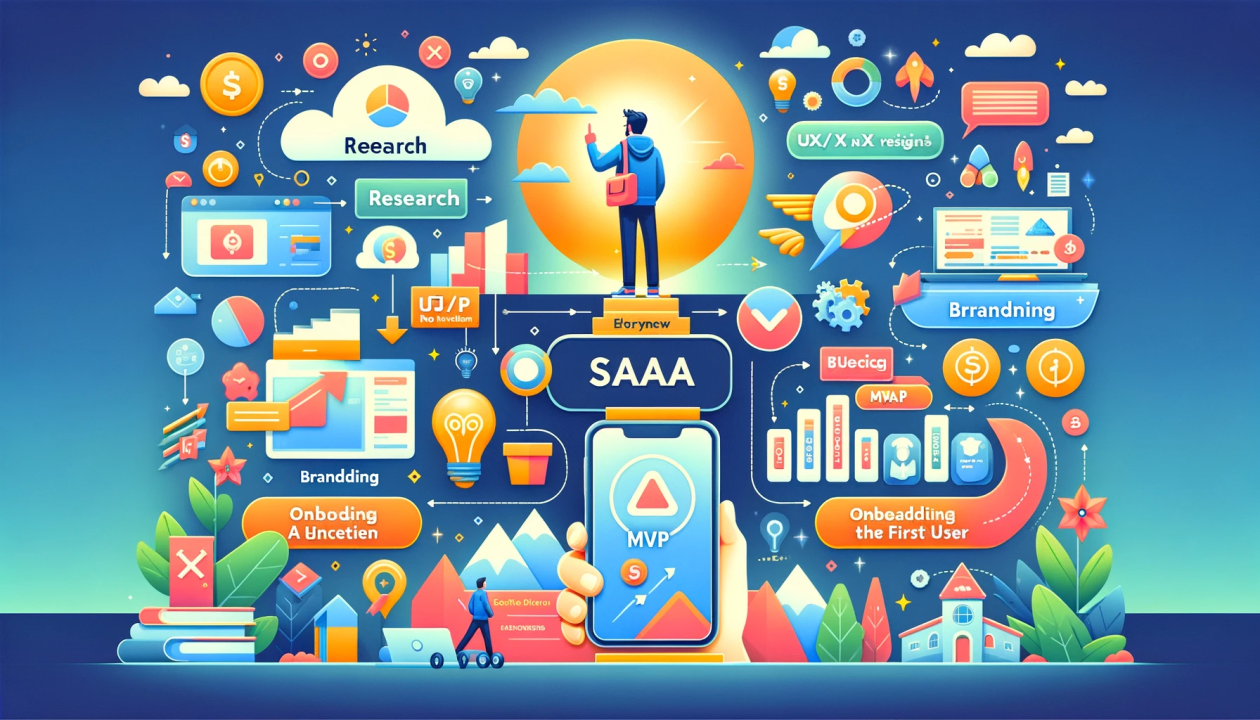

Embarking on building a SaaS product without any investment is an adventurous journey. Let's delve deeper into each step, breaking them down into three sub-steps with examples to provide a clearer roadmap.
🔍 Step 1: Ideation & Market Research
- Problem Identification 🎯Find a common problem.Example: Notice how remote teams struggle with project management.Conduct informal interviews to validate this problem.
- Target Audience 👥Identify who faces this problem the most.Example: Remote software development teams.Use LinkedIn polls to gauge the extent of the problem within this group.
- Competitive Analysis 🕵️♂️Look into existing solutions.Example: Research popular project management tools like Trello and Asana.Use SWOT analysis to find gaps these tools aren't addressing.
🎨 Step 2: Branding & UI/UX Design
- Brand Storytelling 📖Craft a story that resonates.Example: Share a narrative of a remote team that became more productive with your tool.Create a blog post or video that illustrates this transformation.
- Logo and Visual Identity 🌈Design a logo that reflects your brand's values.Example: A logo that combines a chat bubble and a checklist to represent collaborative project management.Use a tool like Canva to create and iterate on your logo design.
- UI/UX Wireframing 🖼Sketch the user interface and experience.Example: Wireframe the dashboard where teams can see their tasks at a glance.Utilize tools like Balsamiq for quick and easy wireframing.
💻 Step 3: MVP Development
- Tech Stack Selection 🧩Choose technologies that suit your MVP.Example: Select React for the frontend for its component reuse and state management features.Use GitHub to explore repositories of similar projects for inspiration.
- Frontend Development 🖥Begin crafting the user-facing part of your app.Example: Develop the login page using React and ensure it's mobile-responsive.Test the page on different devices using BrowserStack.
- Backend Development ⚙️Set up the server, database, and APIs. Example: Use Node.js and Express to create RESTful APIs for task management. Deploy a test version on Heroku and conduct API testing with Postman.
🚀 Step 4: Onboarding Your First User
- Launch Strategy 🌟Plan a soft launch approach. Example: Launch a beta version exclusively for remote startups. Offer the beta version through startup forums like Product Hunt.
- Initial Outreach ✉️Reach out to your potential first users.Example: Send personalized emails to remote team leads offering a free trial.Track email engagement using Mailchimp to gauge interest.
- User Feedback 📝Collect and analyze feedback from early users.Example: Use a simple Google Form to gather user impressions and improvement suggestions.Implement a feedback widget directly within your MVP using tools like Hotjar.
Conclusion
By further breaking down each step into actionable sub-steps and providing examples, the path to building a SaaS product with zero investment becomes even more tangible. Leveraging free and accessible tools while focusing on iterative development and user feedback can significantly increase your chances of success. Remember, the journey of building a SaaS product is as much about learning and adapting as it is about the final destination.


