Nobody Warned You About Month 6
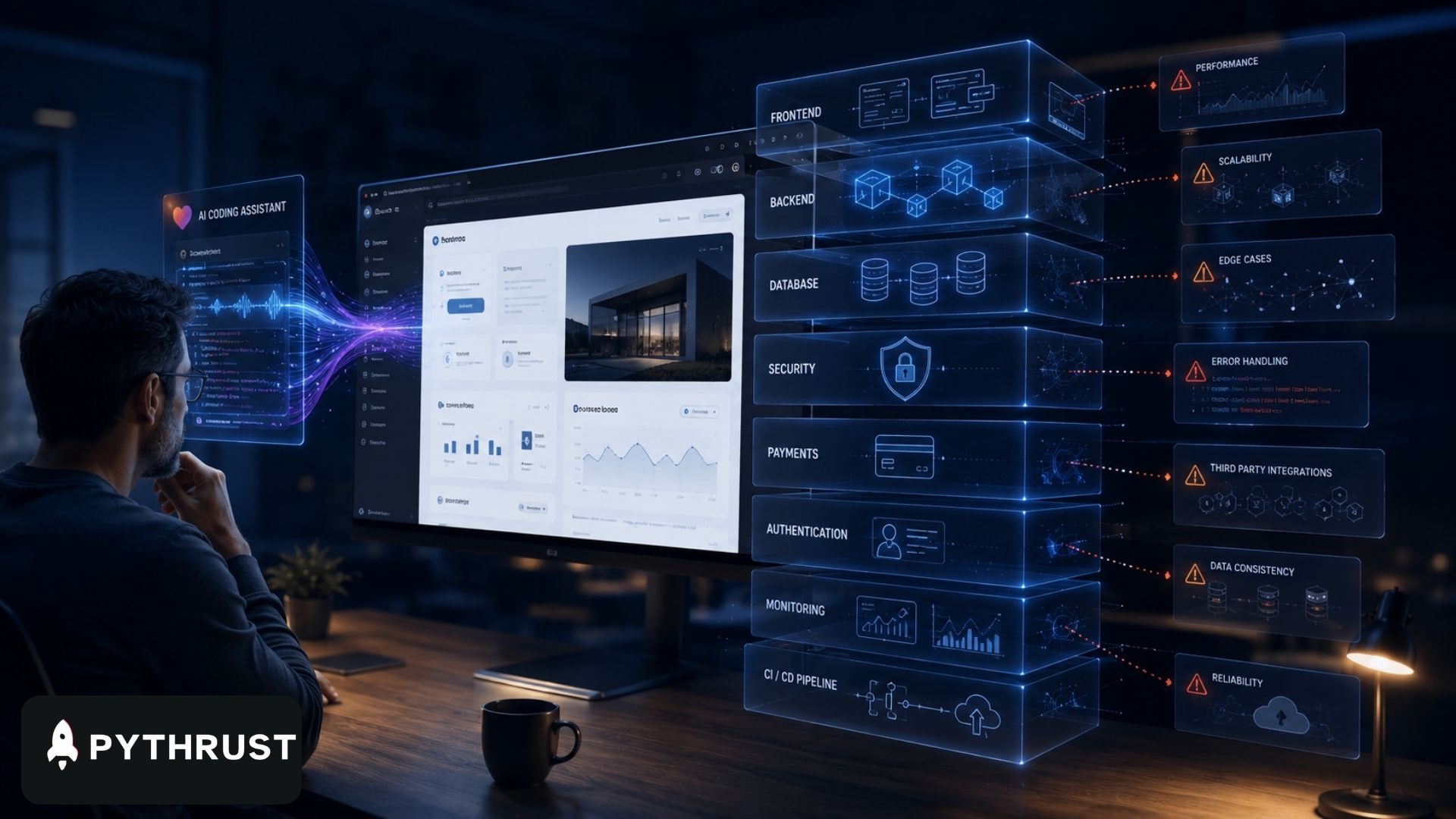
It is 2 AM on a Tuesday. Your LangGraph setup has grown from a clean 3-node demo to a 17-node monster. Yesterday a new tool was added for PDF parsing but it subtly shifted a conditional routing threshold. The agent loop is now in production and quietly failing, swallowing errors without throwing exceptions. The engineer who wrote the original state transitions is on PTO. Your on-call engineer is staring at a sprawling graph diagram, unable to isolate why the system is stuck in an infinite thought loop, burning tokens by the second.
You are not staring at a code bug. You are staring at a framework-choice failure. And the worst part? Nobody warned you this was coming. The tutorials did not warn you. The documentation did not warn you. The comparison articles you have read four of them compared GitHub stars, documentation quality, and feature checklists. Not a single one said: this is precisely how this breaks in production, and this is exactly when.
"I kept reading the docs thinking I was doing something wrong. Turns out I was doing everything right for a framework that was never designed to survive what we were building." That is not a Reddit comment. That is a real CTO, six months into a production deployment.
This article is not another feature comparison. It is a map of the failure modes. Both of them. Specific, timed, and honest.
The right question is not: 'Which framework is better?' It is: 'Which failure mode can your team survive?'
What LangGraph Does to You at Scale and When
Why Teams Choose It (and Why They're Right at First)
Let us be honest about why LangGraph is compelling. It is not hype. The graph-based mental model is genuinely powerful. No black-box orchestration. Explicit state management. Complete control over the agent loop. For a capable engineering team that wants to own every decision, it feels like the right call. And in the early stages, it absolutely is.
You can see exactly which node executes next. You can trace every state transition. You can add retry logic, conditional edges, and parallel tool calls with surgical precision. If you want to build something where every step must be defined, auditable, and explainable to a compliance team, LangGraph delivers exactly what it promises. There is no magic. There is no hidden orchestration layer making decisions you did not sanction. It is your architecture, made explicit.
For teams building complex, long-running workflows, document review pipelines, multi-step research agents, financial reconciliation systems, this level of control is not optional. It is a requirement. And LangGraph is genuinely one of the best tools in the world for it.
The Complexity Ceiling It Arrives on Schedule
But here is what nobody tells you in month one: that same explicitness is the thing that will eventually kill your velocity.
The graph that feels clean at 3 nodes begins to gain weight around months 3 and 4. Error-handling conditional edges appear. Subgraphs for parallel tool execution get added. Retry logic gets bolted onto nodes that were never designed for it. The graph that was once self-documenting now needs an actual diagram just to explain it. A new engineer's onboarding goes from two hours to two weeks. One new tool integration breaks two existing routes in subtle, hard-to-detect ways.
This is the complexity ceiling. And it does not arrive suddenly. It arrives on schedule, around month 4 to 6, quietly, incrementally, one reasonable decision at a time.
The Multi-Agent Collapse: Rexera
Rexera operates in the $50 billion real estate transaction industry. Their goal was straightforward: build an AI system capable of reviewing thousands of real estate workflows daily with the precision of a human operator. They started with single-prompt LLMs. That failed the system was confidently wrong too often.
So they moved to multi-agent. They chose CrewAI and built exactly what the architecture promised: specialised agents with defined roles, each responsible for a specific part of the transaction review process. One agent for rush orders. One for compliance checks. One for communication verification. Clean structure. Clear ownership. It looked like what multi-agent was designed for.
Then production happened.
When the CrewAI multi-agent system reviewed a rush order workflow, it identified that the rush was executed but completely missed that the system had recorded 'Rush Order: False,' directly contradicting the client's request. In real estate, a misclassified rush order causes closing delays, legal exposure, and direct financial losses. The system was confidently wrong and had no mechanism to catch itself.
The root cause was structural. CrewAI agents coordinate through natural language every delegation between agents triggers an LLM call. Context gets compressed, summarised, and handed off as text at every step. No typed state. No deterministic decision path. No way to force one agent to verify both the acknowledgment AND the system record simultaneously.
After migrating to LangGraph, Rexera reduced false positives from 8% to 2% and false negatives from 5% to 2% specifically because LangGraph's structured, branching decision paths enforced verification at every step rather than relying on agents summarising each other's outputs.
The multi-agent architecture was not wrong. The framework's inability to enforce strict, typed state handoffs between agents was what broke it. When agents communicate through natural language summaries instead of explicit contracts, context bleeds silently. And in production, bleeding context kills deals.
The God-Graph: Onboarding Paralysis
This one does not happen in a crash. It happens in a resignation letter.
Month 5. The senior engineer who architected your LangGraph pipeline sends a calendar invite for a 1:1. Two days later you are reading their two-week notice.
Standard engineering offboarding takes a week for the codebase. But your LangGraph business logic is not read top-to-bottom. It is spread across 40 interconnected nodes, cyclic edges, nested subgraphs, and state reducers that were never documented because the architect held all of it in their head.
Your replacement engineer senior, capable, experienced in Python spends three weeks just trying to whiteboard the execution flow. When they attempt to add one new tool integration, the graph silently overwrites a critical piece of state from three nodes upstream. No exception is thrown. The system just behaves differently.
Research on multi-agent production architectures consistently finds that engineering teams build systems with 12 specialist agents where 3 would have been sufficient. In peer-to-peer architectures, coordination complexity grows quadratically with agent count. The 'flexible framework' has built something that functions as a proprietary, unreadable visual programming language, one that only the engineer who just left fully understood.
Don't start with multi-agent because it sounds sophisticated. Start with the minimum viable number and split only when you have evidence that a single agent is degrading on a specific task.
The Real Cost It Is Organisational, Not Technical
This is the part that most comparison articles skip entirely. The cost of a LangGraph complexity ceiling is not a server bill. It is not a performance regression you can benchmark. It is an organisational failure, a knowledge problem, a team problem, a documentation problem.
LangGraph's flexibility means every bit of complexity in your graph is self-authored. There is no abstraction to replace, no framework to blame. The graph is your architecture. When it becomes unmaintainable, you cannot upgrade your way out of it. You cannot patch your way out of it. You have to understand it. And if the person who understands it has left, you are starting over.
This is the failure mode that hits teams hardest: not the technical ceiling, but the human one. The graph outlives the engineer who built it. And it was never designed to be maintained by someone who was not there when it was drawn.
What LangGraph Is Genuinely Best For
LangGraph is the right call when you need deterministic, auditable, multi-step workflows where every state transition matters. If you are building compliance-sensitive pipelines, document processing systems, financial reconciliation agents, or any workflow where a human needs to be able to trace exactly what happened and why LangGraph gives you that. The control is real. The traceability is real.
It works best when paired with LangSmith for observability, Pydantic for typed state, and a team culture that treats graph documentation as a first-class engineering artifact. The teams that thrive with LangGraph are the ones that were already doing strict architectural review before they even picked a framework. LangGraph did not make them disciplined. It rewards the discipline they already had.
What ADK Does to You at Scale and When
Why It Is Genuinely Appealing
Let us be equally honest about ADK. The appeal is not marketing. It is real.
ADK's integration with Vertex AI, Cloud Run, and Gemini means you are not solving orchestration from scratch. You get a managed deployment path, integrated tool ecosystems, built-in session management, and observability that does not require you to hire a DevOps specialist before you ship your first agent. For a team that wants to move fast without getting buried in infrastructure decisions, ADK removes legitimate friction.
The opinionated defaults are a feature, not a bug at least in the beginning. You are not choosing between 12 memory backends. You are not configuring your own agent-to-agent protocol. Google has made those decisions for you, and for the first 3 to 4 months, that feels like a gift.
For GCP-native organisations teams already running on Cloud Run, storing data in BigQuery, using Gemini as their default model ADK is not a new commitment. It is an extension of existing infrastructure. The 'lock-in' that critics warn about is, for these teams, simply continued investment in a platform they have already chosen. That is a completely rational position.
The Lock-In Accumulation Silent and Additive
But here is what does not get written about in the tutorials: the ADK problem is not visible on day one. It builds. Slowly. Rationally. One sensible decision at a time.
Vertex AI is assumed as the runtime. Google's ecosystem becomes the foundation for your tool integrations. Gemini is the default model shape. Your session state lives in a managed store you do not control. Your RAG pipeline is indexed in a vector store inside Google's cloud. Your routing logic is tied to the inference runtime your vendor hosts.
Each individual decision was completely rational. Collectively, they mean you are building as a GCP tenant, not building software. The lock-in has no noise. It is silent and additive until the day a client asks you to move.
The Compliance Hostage Situation
This is not a hypothetical. It is a predictable trap that engineering teams are walking into right now.
Picture month 8 of your product. Your sales team closes the deal you have been working toward for three months on a large enterprise client in the EU healthcare sector. The contract value is significant. Legal is reviewing. Engineers are already scoping the integration. You have earned this.
Then the client sends one requirement: all agentic processing must run in an isolated, HIPAA-compliant environment using an open-source model like Llama 3. No managed cloud inference. No third-party model APIs. Full auditability. On-premise or private VPC.
Your engineers start the migration. Their faces go pale.
The memory layer your agents rely on lives in a managed session store you do not control. The routing logic is tied to the inference runtime your vendor hosts. The RAG pipeline is indexed in a vector store inside their cloud. Your accumulated AI context, the corrections, preferences, routing workflows, and institutional knowledge your agents have developed is trapped inside the vendor's proprietary infrastructure. Exporting raw transcripts is not the same as exporting portable, usable context.
ADK's Agent Runtime packages your source as a tarball and deploys to Vertex AI reasoning engines with no Dockerfile, no container. Fast to deploy. Hard to leave.
This is the lock-in that never announced itself. Every individual decision was rational. Six sensible choices. One architectural trap. Migration costs in this scenario average $315,000 per project. You are not facing an API key swap. You are facing a near-complete rewrite of your agent's intelligence layer. The enterprise deal either gets delayed by months or surrendered entirely.
You did not buy an agent framework. You became a GCP tenant. And you did not realise it until the moment a client asked you to leave.
The Real Cost Name It Precisely
Try swapping Gemini for Claude or GPT-4o in a mature ADK agent system. Try moving the runtime to AWS because your enterprise client requires it. That is when you discover what you actually own and what you have been renting from Google without realising it.
Your accumulated AI context, the corrections, routing workflows, memory patterns, and institutional knowledge your agents have built is trapped inside the vendor's proprietary infrastructure. That distinction is the difference between a migration that costs a week and one that costs $300,000.
For more on AI agents and HIPAA compliance requirements and what enterprise clients are increasingly requiring, the regulatory landscape is tightening not loosening. Every month you build deeper into managed infrastructure is a month that requirement becomes more expensive to meet.
What ADK Is Genuinely Best For
ADK is the right call when speed to production matters more than architectural flexibility, and when you are already committed to the GCP ecosystem. If you are a startup that needs to ship a working agent in weeks not months, a team without a dedicated DevOps engineer, or an organisation that has already bought into BigQuery, Cloud Run, and Gemini ADK removes real friction and adds real value. The managed infrastructure is not a weakness. It is the product.
It works best when you have had a clear-eyed conversation with your leadership team about what happens if a major client ever asks you to go on-premise. If that conversation ends with 'that will never happen' and you are genuinely certain about it ADK is a legitimate, well-engineered choice. If that conversation ends with 'probably not, but who knows' you need to build with more portability in mind from day one.
The Counterargument and Why Both Sides Are Partially Right
Steel-Manning LangGraph
The complexity ceiling argument is valid but it is not a framework problem. It is a team problem wearing a framework problem's clothes. Strong engineering cultures with documentation discipline, strict code review, deliberate architectural decisions, and genuine graph-thinking maintain complex LangGraph systems without incident. The failure mode hits hardest on teams with high turnover, unclear ownership, or limited senior engineering capacity.
If your team has the discipline to treat graph state as an API contract, to document state transitions as rigorously as you document function signatures, and to enforce architectural review before adding any new node, LangGraph's ceiling is significantly higher than most articles suggest. The framework is not the problem. The process is the problem. And the process is fixable.
Steel-Manning ADK
The lock-in argument largely disappears if you are already committed to GCP. If your data lives in BigQuery, your infra is on Cloud Run, your team is already paying for a Google enterprise agreement ADK is not creating new lock-in. It is deepening an existing commitment to a platform you have already chosen and audited. For these organisations, the so-called vendor risk is simply continued investment in infrastructure they control commercially.
And on the model question: Gemini is not a consolation prize. For many use cases particularly those involving multimodal inputs, long-context processing, or deep Google Workspace integration Gemini is the best model available. Choosing ADK because Gemini is your model of choice is a completely legitimate architectural decision, not a compromise.
The Honest Synthesis
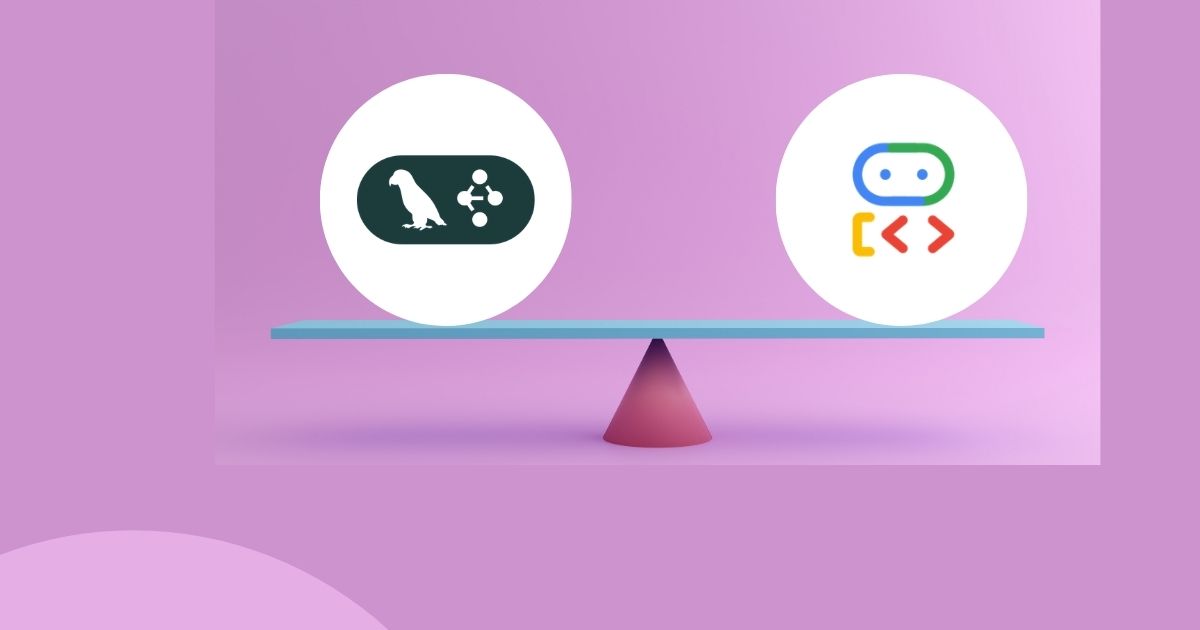
This is not a framework conflict. It is an infrastructure philosophy conflict. LangGraph bets on the capability and discipline of your team. ADK bets on the stability and continuity of Google's platform. Neither bet is wrong until your world changes.
LangGraph asks: 'Can your team own this?' ADK asks: 'Can you trust Google to keep this running?' Both are legitimate questions. Both have legitimate answers depending on who is asking.
Over 70% of enterprise AI agent proof-of-concepts never reach production. The reason is almost never the LLM. It is almost always the framework choice. Either the architecture became unmaintainable before it shipped, or the infrastructure became too locked to adapt when requirements changed.
The Head-to-Head: What Each Framework Actually Feels Like to Work With
Dimension | LangGraph | ADK |
|---|---|---|
Team required | 2+ senior Python engineers, graph/state-machine experience | 2–4 person teams; no dedicated DevOps needed |
Speed to production | Slower upfront design investment required | Fastest path; working agent in 2 weeks |
Model flexibility | Fully model-agnostic GPT-4o, Claude, Gemini, Llama 3 | Gemini-first; other models possible but non-native |
Observability | LangSmith full tracing, at cost | Vertex AI dashboards managed, less transparent |
Stateful workflows | Purpose-built graph + state persists natively | Managed session storage convenient, less portable |
Lock-in risk | None open source, self-hosted | High Vertex AI, Gemini runtime, managed infra |
Failure mode | Graph complexity → unmaintainable at month 4–6 | Infrastructure lock-in → un-portable at month 8–12 |
Community | Large, mature LangChain ecosystem | Newer, Google-backed, growing |
Best for | Compliance-sensitive, auditable, long-running workflows | Fast MVP, GCP-native teams, customer-facing agents |
Observability and Debugging
When something breaks in LangGraph, you can see exactly where it broke. The graph structure means you can trace a specific node, inspect the state before and after, and isolate the failure to a single transition. LangSmith, LangChain's observability tool, makes this even cleaner though it adds cost and setup time. For teams that need production-grade tracing, this combination is genuinely powerful.
In ADK, observability is more managed which means it is easier to start with and harder to go deep on. Vertex AI provides monitoring dashboards, but if you want to inspect the internal state of an agent mid-execution, you are working within what Google exposes, not what you build. For many teams, this is more than enough. For teams with complex debugging requirements, it can feel like debugging through a window.
Multi-Model Flexibility
LangGraph is genuinely model-agnostic. You can run GPT-4o, Claude, Gemini, Mistral, Llama 3 or switch between them for different nodes in the same graph. This is not a marketing claim. It is a real architectural advantage for teams that want to use the best model for each specific task, or for teams that need to keep their options open as the model landscape evolves. If the best model for your classification task is different from the best model for your summarisation step, LangGraph lets you use both in the same pipeline without rebuilding your orchestration layer.
ADK is Gemini-first. You can use other models, but the framework is optimised for Gemini, the tooling assumes Gemini, and the deployment path is built around Google's inference infrastructure. For teams that have decided Gemini is their model, this is fine. For teams that are still evaluating, this is a constraint worth naming explicitly before you are 6 months in and the cost of switching has become significant.
Speed to First Production Agent
ADK wins here, and it is not close. If you need a working agent in production in two weeks, ADK's managed infrastructure, opinionated defaults, and built-in deployment path make it the fastest route from idea to running system. There is no DevOps overhead. There is no orchestration layer to configure. You write agent logic, and Google handles the rest.
LangGraph takes longer to get right. The graph model requires more upfront design thinking. State management needs to be explicit from day one. And the deployment pipeline is your responsibility to build and maintain. The teams that get hurt the most are the ones who underestimate the upfront investment and then try to course-correct mid-flight.
Long-Running and Stateful Workflows
LangGraph is purpose-built for this. If your agent needs to run for hours, pause and resume, handle human-in-the-loop interruptions, or maintain complex state across multiple sessions, LangGraph's architecture is designed exactly for these requirements. The graph persists. The state persists. And you control exactly what persists and how.
ADK handles stateful workflows through managed session storage which works well until you need to move that state somewhere else, inspect it directly, or migrate it to a different infrastructure. The managed approach trades control for convenience, and for most use cases, that is a reasonable trade. For mission-critical, long-running workflows where state is a first-class concern, LangGraph gives you more.
Cost at Scale
The cost comparison is more nuanced than most articles suggest. LangGraph itself is open source; the framework costs nothing. But the infrastructure you build around it, the engineers you need to maintain it, and the LangSmith subscription for production observability all add up. At scale, a complex LangGraph deployment can be expensive not because of the framework, but because of the engineering overhead.
ADK's cost profile is more predictable. You pay for Vertex AI compute, Gemini inference, and managed infrastructure. There are no surprise engineering costs from maintaining a complex graph. But as your agent usage scales, Vertex AI costs can grow quickly, and you have less flexibility to optimize them than you would with a self-managed infrastructure. The managed convenience that saved you money at month 2 can become a constraint at month 18.
Community and Support
LangChain and LangGraph have one of the largest communities in the AI agent space. Stack Overflow has answers. GitHub issues get closed. Discord is active. When something breaks at 2 AM, you will find someone who has seen it before. That is not a small thing when you are debugging a production incident at midnight.
ADK is newer. The community is smaller. GitHub issues sometimes go unanswered for days. If you hit an edge case, you may be the first person to hit it. For teams that depend on community support for debugging, this is a real risk to factor into the decision. Google's enterprise support is strong, but it is not the same as a community that has already seen your exact failure mode and written a blog post about it.
The Decision Matrix Honest, Not Diplomatic
Here is the framework for making this decision cleanly. Not as a feature comparison as a team and infrastructure philosophy match. Read each dimension and answer honestly about where your team actually is, not where you want it to be.
The Two Questions That Cut Through Everything
Before you commit, answer these two questions honestly. Not in a meeting. Not in a doc. Alone, where you cannot hedge.
Question 1: If this graph has 30 nodes in 6 months, does your team have the engineering discipline to maintain it? Not the intention. The discipline. The process. The documentation culture. The architectural review. If you are not certain that uncertainty is your answer.
Question 2: If you need to move off GCP in 18 months because a client requires it, because regulation demands it, because a better model appears on another cloud can you afford a near-complete rewrite? Not theoretically. Financially. Contractually. Operationally.
Your gut response to those two questions is more reliable than any feature comparison. The teams who get this wrong are not the ones who chose the wrong framework. They are the ones who chose the right framework for a version of their company that no longer exists.
Choose LangGraph If
Your team has at least two senior Python engineers who have worked with state machines or workflow engines before.
You are building something where a single misclassification has real consequences: compliance, legal, financial.
Your roadmap includes enterprise clients with data sovereignty requirements or on-premise deployment obligations.
You have time to invest in the architecture before the first production deployment and a team culture that will actually maintain the graph as a living document.
Choose ADK If
You are a team of two to four people and nobody wants to own the orchestration layer.
You need to demonstrate a working agent to stakeholders within four weeks.
You are already on GCP and the idea of managing your own deployment pipeline is genuinely painful.
Your primary model is Gemini and you have no near-term reason to switch and no imminent client requirement that would force a move off Google's infrastructure.
Consider a Hybrid Approach If...
Your core business logic requires LangGraph's control, but you want to use ADK's tooling and ecosystem for specific integrations. This is increasingly common: LangGraph for the orchestration layer, Google's tools for search, file handling, and Workspace integrations. It is more complex to build, but it keeps your options open.
The teams that do this well are the ones that draw a clear boundary upfront. This is what LangGraph owns, this is what ADK tools handle and enforce that boundary through code review. Without that boundary, the hybrid approach becomes the worst of both worlds: complexity without control, and lock-in without the speed advantage.
Most teams already know the answer. They just want permission to commit to it or someone to blame if it goes wrong. This article will not give you absolution. It gives you the structure to take ownership of the decision.
Now Make the Call and Own It
Regardless of which framework you choose, month 6 will arrive. The complexity ceiling or the portability wall is one of them in your future. It was never a question of which framework is superior. It was always a question of which failure mode your team can see coming and survive.
What is more likely to kill your project: a graph nobody understands, or infrastructure you cannot leave? Answer that honestly. You have your answer.
If this framing has helped you think more clearly about your agent stack, the decision ahead is simpler than it felt at the start of this article. You now know the exact shape of the risk on each side. The rest is team honesty and infrastructure audit.
One Final Note for CTOs
The framework decision is not a one-time call. Build in a review at month 3. Ask explicitly: is the graph becoming difficult to explain to a new engineer? Is there a client requirement on the horizon that might require infrastructure portability?
These questions, asked at month 3, are 10-minute conversations. Asked at month 8, they are $315,000 decisions.
The organisations that navigate this well are the ones that institutionalise the question not as a one-time framework audit, but as a recurring architectural checkpoint. Not because they expect to change frameworks. Because they expect their requirements to change. And they want to know the cost of adaptation before they have already incurred it.
Why This Is the Work Pythrust Was Built to Do
Everything described in this article, the failure mode analysis, the graph complexity ceiling, the lock-in accumulation, the hybrid architecture boundary is the work of designing AI agent systems that survive production. It is the work most framework comparisons skip because it is harder than running a benchmark.
It is also the work that Pythrust was built to do.
We build multi-agent AI systems for growing businesses. The systems we build are not demos optimised for a controlled environment. They are production systems designed to handle the volume, variability, and edge cases of real business operations. And they are designed from the first scoping conversation to the last deployment check around the question of which failure mode your team can survive, and how to build the architecture around that answer.
We have navigated month 6. We have seen the God-Graph. We have been in the room when the CTO realised their ADK deployment could not survive the enterprise client's infrastructure requirements. We design for these failure modes from the start whether that means a disciplined LangGraph architecture with LangSmith observability, a GCP-native ADK deployment with explicit portability boundaries, or a hybrid architecture that keeps your options open while shipping fast.
We also design for the human side of the system. The documentation culture that makes a LangGraph graph maintainable. The infrastructure audit that surfaces ADK's lock-in before it becomes a $300,000 problem. The architectural review process that catches the God-Graph at 5 nodes, not 40. The human in a well-designed agentic system is not an afterthought. They are the most important architectural component: the judgment that keeps the system honest and the stewardship that keeps it maintainable.
The framework decision is not about which technology is better. It is about which system your team can own, maintain, and evolve as your business changes. That is the system we help you build.
If you are evaluating your framework decision, planning a migration, or designing a multi-agent system that needs to survive enterprise compliance requirements this is exactly the conversation we exist to have.
Ready to build? Work with people who have already seen month 6.
We help businesses design and deploy production AI agent systems whether that means LangGraph, ADK, or a hybrid architecture that keeps your options open. No tutorials. No demos. Production-grade architecture from teams who have already navigated the failure modes described in this article.
Bring us your framework decision. We will help you map the failure modes, design the architecture around your team's actual capabilities, and build the system that survives not just month 1 but month 18.
Book a strategy session with Pythrust
© 2026 Pythrust Technologies. All rights reserved. | Built in Gurugram, India.