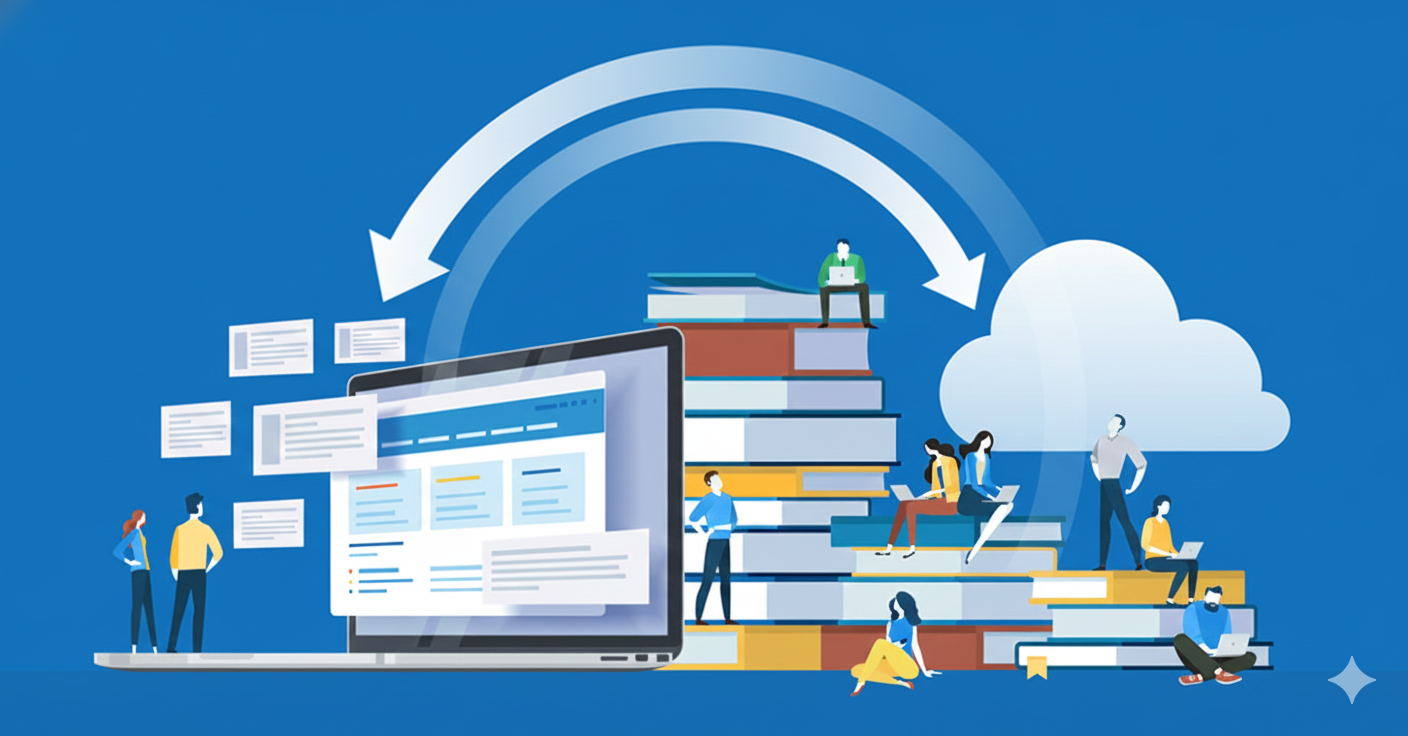


The Adaptive Classroom: AI-Driven Paths to Help Students Learn Faster and Stay Engaged
The traditional, one-size-fits-all model of education struggles to accommodate the diverse learning styles, paces, and knowledge gaps inherent in any student population. When every student receives the same lesson plan, the fastest learners become bored, and those who need extra time fall behind. This lack of individualization is a primary bottleneck to maximizing learning outcomes.
Modern Education Technology (EdTech) platforms are fundamentally transforming this landscape by leveraging AI-Powered Personalization. These systems move beyond simple digital lessons to create truly adaptive learning paths that act as a personal tutor for every student. By tailoring content, pace, and feedback, EdTech platforms significantly improve engagement, address skill deficiencies instantly, and drive superior long-term learning outcomes.
I. The Foundation: Diagnostic and Behavioral Data
The power of modern EdTech stems from its continuous, granular collection of student data, which is impossible in a traditional classroom setting.
1. Granular Diagnostic Assessments
Before a student even begins a new module, the platform uses quick, intelligent diagnostic assessments to pinpoint their existing knowledge base and any underlying gaps.
Pre-requisite Identification: The system identifies exactly which foundational concepts a student has not yet mastered.
Learning Profile: The platform assesses the student's preferred learning style (e.g., visual, auditory, kinesthetic) and their optimal pace (e.g., quick mastery vs. methodical repetition).
2. Real-Time Behavioral Analysis
While the student is interacting with the content, the platform continuously tracks behavioral data:
Time on Task: How long a student spends on a specific question or video.
Error Patterns: Not just whether an answer is wrong, but why it is wrong (e.g., misunderstanding the formula vs. simple calculation error).
Engagement Signals: Which content formats (e.g., interactive quizzes, videos, text) lead to higher focus and retention.
II. The Execution: Adaptive Learning Paths
This data fuels the core engine of modern EdTech: the adaptive learning path.
3. Dynamic Pacing and Mastery Focus
The platform's pacing is governed by the student's demonstrated mastery, not a fixed calendar schedule.
Acceleration: If a student masters a concept quickly, the platform fast-tracks them to the next level of complexity, preventing boredom and increasing challenge.
Targeted Remediation: If a student struggles, the platform immediately provides micro-interventions—short, supplemental lessons, practice problems, or alternative explanations focused only on the deficient skill, avoiding the frustration of repeating an entire module.
4. AI-Driven Content Recommendations
Just as streaming services recommend shows, EdTech platforms recommend the next piece of educational content.
Content Variety: Recommendations include different formats (e.g., a simulation for a kinesthetic learner, an animated explanation for a visual learner) to ensure the concept resonates.
Spaced Repetition: The AI uses algorithms to schedule review quizzes at scientifically optimal intervals, ensuring long-term memory retention and preventing the student from forgetting previously mastered material.
5. Personalized Feedback and Coaching
AI agents can provide instant, constructive feedback that is often unavailable from an overworked human instructor.
Error Diagnosis: Instead of simply marking an answer wrong, the system explains why the answer is incorrect and points the student back to the precise section of the curriculum needed for review.
Motivational Guidance: The platform can tailor motivational messages and goal-setting based on the student's historical performance, encouraging persistence without overwhelming them.
III. The Outcome: Measurable Improvement in Outcomes
The shift to personalized EdTech results in profound educational and business benefits.
Faster Skill Acquisition: Students spend less time on concepts they already know and more time on high-friction areas, accelerating their overall learning timeline.
Increased Engagement and Retention: By providing content that is always relevant and appropriately challenging, students are more likely to stay engaged with the platform, leading to higher course completion rates.
Empowering Educators: Teachers are freed from grading and administrative tasks. They gain access to rich dashboards that instantly highlight which students are struggling and with which specific concepts, allowing them to focus their limited time on high-impact, small-group intervention.
Modern EdTech platforms, through real-time personalization and adaptive paths, are fundamentally making learning more efficient, effective, and equitable for every student.