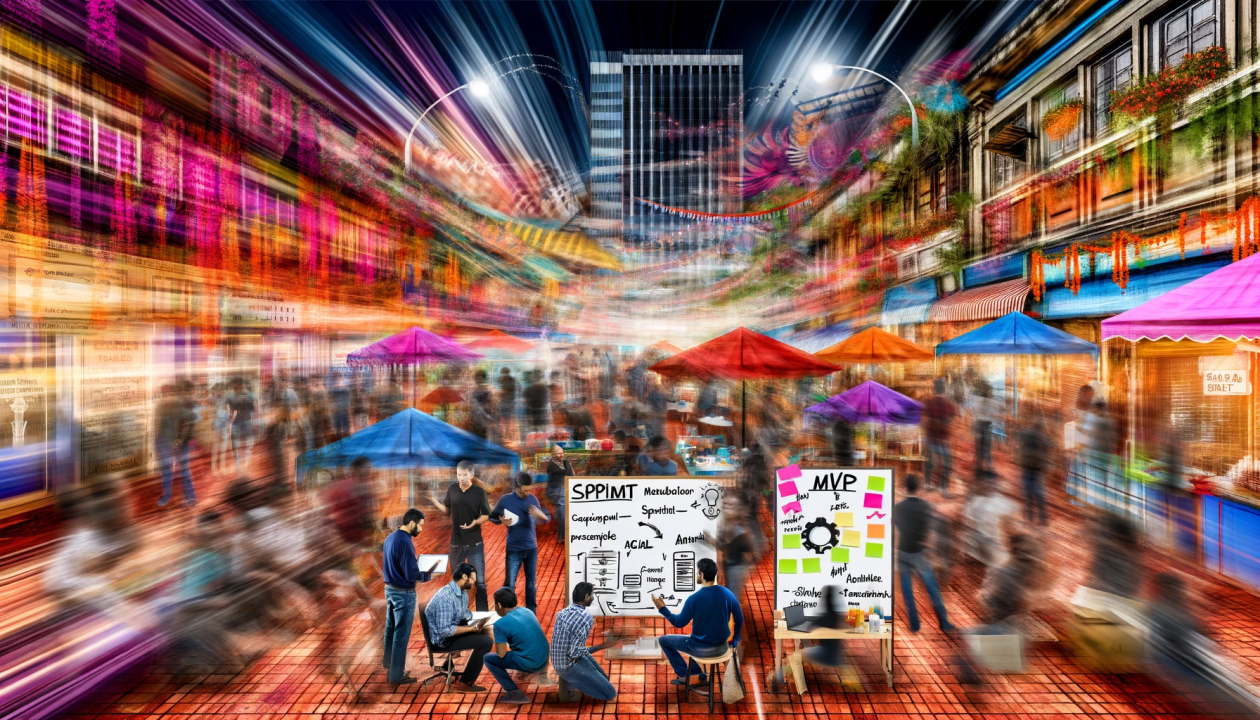


In today’s hyper competitive digital world, users expect products that are not just functional but fast, intuitive, aesthetically polished, emotionally engaging, and built to scale. Transforming an idea into a real, successful product requires a seamless blend of strategy, design, engineering, and iteration.
Let’s explore how great digital products are built not by chance, but through a structured, user-first approach.
🔍 Step 1: Understanding the Vision and the User
Great products begin with clarity.
Before any screen is designed or any feature is coded, the foundation is laid through:
-
User research — understanding real problems, motivations, and behaviors
-
Competitive analysis — knowing the landscape and finding your differentiation
-
Business alignment — mapping features to goals, budgets, and timelines
This initial discovery phase ensures your product solves a real problem — not an imagined one.
It is the difference between a product that users try…
and a product that users love, adopt, and recommend.
🎨 Step 2: Designing Experiences That Feel Effortless
User experience is not an add-on — it is the product.
A well-designed flow makes the user feel in control.
A poorly designed one makes them leave in seconds.
Modern product design blends:
-
Wireframes → clarity of structure
-
User journeys → mapping emotional touchpoints
-
UI design → colors, typography, spacing, and visual harmony
-
Micro-interactions → little moments that delight and guide
-
Responsive layouts → seamless experience across screens
Great design solves problems invisibly, making complex workflows feel simple and enjoyable.
⚙️ Step 3: Engineering the Product — Reliable, Scalable, Future-Ready
Behind every smooth user interface is a powerful technical engine.
Strong engineering ensures that your product is:
-
Secure
-
Fast
-
Scalable
-
Stable under real-world usage
-
Built using modern frameworks and best practices
Whether it’s frontend architecture, backend APIs, databases, or mobile apps — engineering converts your product vision into a high-performance system users can trust.
Great engineering doesn’t just “work.”
It performs.
🛠 Step 4: Building Smart, Lean, and Iteratively
Modern product teams don’t wait 6–12 months before releasing something.
They validate early, iterate often, and improve continuously.
With Agile practices, sprint cycles, and rapid prototyping, teams can:
-
Ship faster
-
Reduce risk
-
Learn from real user feedback
-
Pivot without heavy losses
-
Improve clarity and prioritization
This approach transforms development from a guessing game into a predictable, data-backed cycle of improvement.
🚀 Step 5: Launching With Confidence
A great launch is more than pushing code to a server.
It includes:
-
Analytics setup
-
Error monitoring
-
Testing across devices
-
Performance optimization
-
UX refinements
-
Documentation
-
Deployment pipelines
Every detail contributes to a smooth, stable, and memorable first experience for your users.
A thoughtful launch sets the tone for long-term trust.
📈 Step 6: Post-Launch Growth & Iteration
A product’s real journey begins after launch.
The best teams actively:
-
Track user behavior
-
Fix pain points
-
Roll out new features
-
Improve onboarding
-
Optimize performance
-
Strengthen retention
-
Respond to market shifts
This continuous improvement keeps the product relevant and competitive.
Products that stop evolving quickly get replaced.
Products that iterate continuously stay ahead.
🌐 Why Businesses Trust Pythrust for Product Design & Development
Because we don’t just build software —
we build solutions that are strategic, intuitive, reliable, and built to scale.
At Pythrust, we bring together:
-
Researchers
-
Strategists
-
Designers
-
Frontend engineers
-
Backend architects
-
Mobile developers
-
QA specialists
-
Product managers
All working collaboratively to turn ideas into real, revenue-driving digital products.
Whether it’s an early-stage MVP, a complex app, or a large-scale platform, we partner with you across the entire lifecycle — from idea to execution to growth.