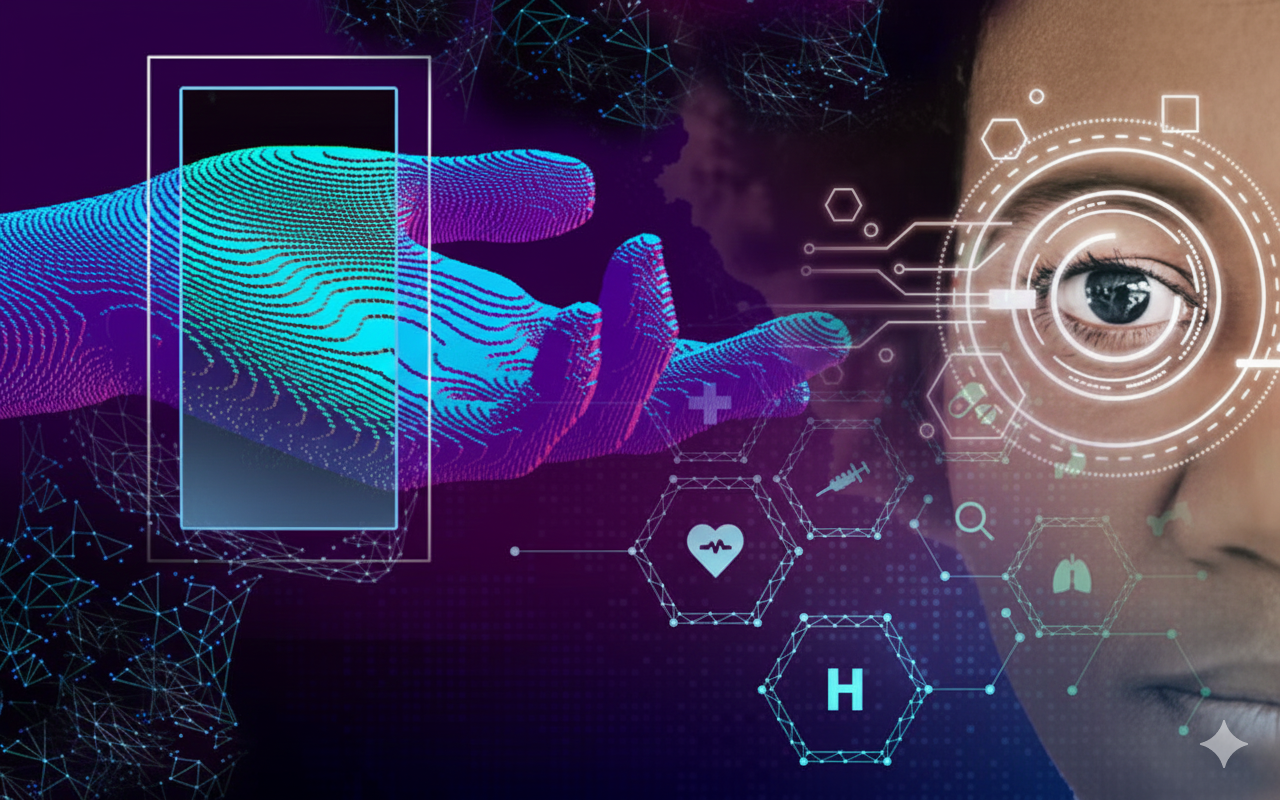

Artificial intelligence (AI) has rapidly transitioned from a conceptual tool to a fundamental utility in healthcare, driving a transformation across clinical, administrative, and research domains. In 2025, AI-powered insights are enabling a crucial shift: healthcare is becoming less about reacting to illness and more about predicting and preventing it.
This revolution is fueled by machine learning models that analyze the massive, complex datasets—from genomic sequences and high-resolution imaging to unstructured clinical notes—that traditional systems couldn't handle.
AI in Diagnostics: Enhanced Accuracy and Speed
One of the most mature and impactful applications of AI is in diagnostic medicine. Deep learning models are now integrated into various imaging and lab workflows, offering a level of speed and precision that significantly augments human capabilities.
Medical Imaging and Radiology 🖼️
AI excels at pattern recognition, making it ideal for analyzing medical images.
Faster, More Accurate Detection: AI algorithms, particularly deep learning models, analyze X-rays, MRIs, and CT scans to detect subtle anomalies that may escape the human eye, such as small lung nodules or early signs of breast cancer. Studies show AI systems can achieve higher accuracy rates than human readers in specific screening tasks.
Prioritization and Triage: AI systems, often referred to as AI-powered decision support systems, can instantly flag images with critical findings (like an acute hemorrhage or a large tumor) and automatically prioritize them in the radiologist's queue. This ensures life-threatening cases are reviewed first, improving workflow efficiency and patient outcomes.
Pathology and Genomics
AI's capability to process high-dimensional data is vital in precision medicine.
Digital Pathology: AI algorithms analyze whole-slide images of tissue samples, counting cells, assessing tumor grades, and identifying microscopic abnormalities with remarkable speed, leading to more precise cancer staging.
Genomic Analysis: AI tools quickly process vast genomic datasets to identify rare genetic variants and their potential correlation with disease susceptibility or treatment response. This allows oncologists to select the optimal personalized cancer therapies, minimizing side effects and improving efficacy.
Predictive Care: From Reactive to Proactive 🩺
The most powerful long-term application of AI is its ability to forecast future health events, fundamentally changing the nature of care from reactive to preventive.
Risk Modeling and Early Warning Systems
AI models analyze integrated patient data—from EHRs, lab results, and even wearable devices—to calculate an individual's risk score for various conditions.
ICU/Hospital Monitoring: In intensive care units, AI systems continuously monitor multiple data streams (vitals, lab work, continuous telemetry) to predict patient deterioration (e.g., risk of sepsis or heart attack) hours before human staff might recognize a critical trend. This allows for timely, life-saving interventions.
Chronic Disease Management: For conditions like diabetes or heart failure, AI analyzes longitudinal patient data to suggest adjustments to diet, medication, or lifestyle, preventing acute episodes and reducing hospital readmissions.
Drug Discovery and Development
AI is dramatically accelerating the traditionally slow and expensive process of bringing new drugs to market.
Target Identification: Machine learning algorithms sift through massive databases of biological, chemical, and patient data to identify promising drug candidates and predict how novel compounds will interact with biological targets.
Clinical Trial Optimization: AI helps design more efficient clinical trials by predicting patient enrollment rates and identifying cohorts most likely to benefit from a specific treatment, cutting down both the time and cost associated with development.
Automated Workflows: Streamlining the Healthcare Journey ⚙️
AI is quietly transforming the administrative side of healthcare, tackling the burden of documentation and manual processes that contribute to clinician burnout. This leads to more data-driven decision-making and efficient use of clinical time.
Clinical Documentation Automation
Clinicians historically spend nearly half their time on documentation. AI offers a solution:
AI Scribes (Voice Assistants): Advanced Natural Language Processing (NLP) tools listen to the natural conversation between a doctor and a patient (either virtually or in-person) and instantly generate structured clinical notes, progress reports, and discharge summaries, which are then integrated directly into the EHR. This can save physicians hours of manual documentation weekly.
Operational and Administrative Efficiency
AI-driven automation handles many high-volume, repetitive tasks across the hospital and clinic setting.
Smart Scheduling and Triage: AI chatbots and virtual health assistants manage initial patient inquiries, offer symptom assessment, and automatically route patients to the correct level of care (virtual visit, specialist, or emergency department), reducing unnecessary ER visits.
Revenue Cycle Management: AI accelerates billing, coding, and claims processing by accurately identifying medical codes from clinical notes, reducing errors and ensuring proper reimbursement.
The integration of AI into these workflows is making healthcare organizations more resilient and scalable, allowing human expertise to be directed toward complex patient care rather than routine administrative tasks.